
WHITESBURG, Ky. — The latest filings in the murder trial against a former Letcher County sheriff provide the most detailed glimpse into the case yet, including grand jury testimony by Kentucky State Police that appears to dispel persistent rumors of a sex scandal involving the victim.
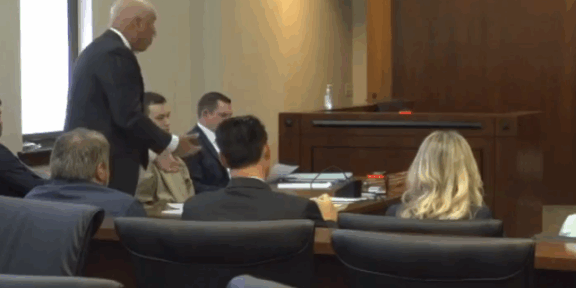
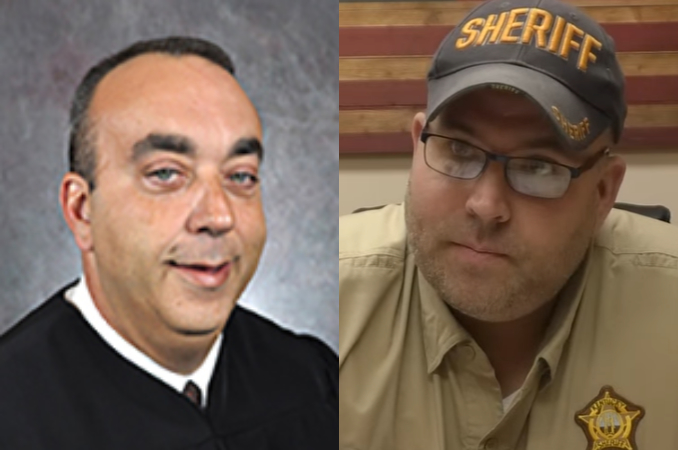
Shawn Mickey Stines, 44, of McRoberts, is charged with one count of murder for the shooting death of District Judge Kevin Mullins in the judge’s chambers last September.
GRAND JURY TESTIMONY
Defense attorneys filed briefs arguing for dismissal of the indictment, for bond to be set, and for release of the results of Stines’ psychiatric exam. Included with those briefs is a transcript of grand jury testimony by KSP Det. Clayton Stamper.

Stamper was questioned at length about rumors that Stines’ actions were prompted by an inappropriate relationship between Mullins and either Stines’ underage daughter or wife.
Stamper testified that both the wife and daughter were interviewed, and both denied having any relationship with Mullins.
Stamper also testified that the daughter’s phone number was not stored in Mullins’ phone; there were no records of any phone calls between Mullins and the daughter, except for just before the shooting, when Stines himself borrowed Mullins’ phone and called his daughter; and no evidence of the two being in contact through social media. He added efforts to delete contact between the two would have shown up during forensic examination.
When questioned by grand jurors, Stamper also testified that there was no evidence of either Stines’ wife or daughter being in danger from the judge.
STATE OF MIND
Stamper also testified about Stines’ state of mind. He noted that family members and coworkers were concerned that he hadn’t been acting like himself in the days prior to the shooting.
He also shared results of a doctor’s visit Stines had the day before the shooting, when he complained of losing sleep, but denied any symptoms of “depression, anxiety, psychosis, suicidal or homicidal thoughts.”
However, in a jail risk assessment report four days after his arrest for murder, a licensed clinical social worker wrote that Stines “is still in an active state of psychosis.”
The assessment also paints a picture of Stines as someone to be exhibiting symptoms of high levels of depression, acute emotional distress and psychological pain.
“He appears disoriented and is only aware of things jail staff tell him,” the report continues. “He has no recollection of the recent past. He does report that he has ‘some’ paranoia because he is unsure where he is at and is told he is incarcerated. He does not appear to understand his charge and is unaware of his surroundings. He does present to be responding to internal stimuli during the evaluation. Mr. Stines should continue at high risk level. He has had episodes of combativeness which has [sic] required pepper spray.”
PSYCHIATRIC REPORT
Briefs were also filed by the defense and prosecution regarding the potential release of Stines’ psychiatric report.
Defense attorneys have said they plan to pursue an insanity defense and have asked for the report to be released.
“Fundamental fairness dictates that a defendant may not be barred from introducing exculpatory or mitigating evidence,” the defense brief says. “Here, the sealed report contains findings central to the defendant’s motions. To prevent him from referencing those findings would undermine his constitutional rights to due process, to present a defense, and to seek reasonable bail …”
But prosecutors are against releasing the report, due to fears of tainting the jury pool.
“[A] significant concern exists that, should the psychological evaluation be unsealed, the public release of the evaluation would taint potential jurors and deprive both the defendant and the commonwealth of a fair trial,” the prosecution brief says.
There does appear room for a compromise, however. Defense attorneys have also said that if the report is not unsealed, they would be satisfied with authorization to use the report’s findings when considering the motions to dismiss the indictment and set bail.
ANOTHER EVALUATION?
Prosecutors also filed notice of their intention to bring in their own private expert to evaluate Stines.
The notice says the expert will examine Stines “relating to both the defendant’s assertion of a defense of insanity at the time of the offense and the defendant’s claims that he suffers, or has suffered, from a mental disease or defect or any other mental condition that bears on the issues of guilt and punishment.”