


RICHMOND, Va. — Legal marijuana dispensaries are one step closer to opening in Virginia, after Gov. Abigail Spanberger and key legislative leaders announced a compromise Tuesday that will allow retail cannabis sales a little more than one year from now.
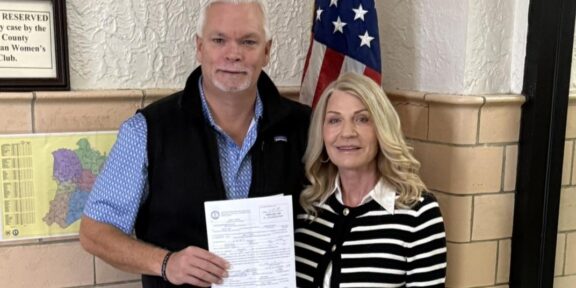
Spanberger was joined by Sen. Lashrecse Aird and Del. Paul Krizek in announcing the deal, with the governor says addresses her concerns about public safety and safeguards for children and teens, while also giving entrepreneurs flexibility to develop new markets.
“Today, I’m excited to stand alongside Senator Aird and Delegate Krizek to announce that we have agreed to a compromise proposal that will create a safe, legal, and well-regulated cannabis marketplace here in Virginia — with recreational sales beginning on July 1, 2027,” said Governor Abigail Spanberger. “We will do it in a way that protects consumers, targets the illicit market with clear enforcement and regulatory authority, and creates a more competitive market for small businesses and farmers.”
Under the compromise, the state will grant a maximum of 350 dispensary licenses and increase the legal possession limit from 1 ounce to 2 ounces.
Other aspects of the the bill include:
- Strengthens child safety protections — including prohibitions on cartoon advertisements, requirements for child-safe packaging, and prohibitions on products sold in the shape of animals, fruits, vehicles, or humans.
- Authorizes the CCA to create escalating penalties for failing to do ID checks — including license revocation for repeated underage sale and requirements that retail stores be no less than 1,000 feet from schools, hospitals, playgrounds, and drug treatment facilities.
- Strengthens oversight of industrial intoxicating hemp — which is currently regulated by the Virginia Department of Agriculture and Consumer Services — by transferring regulation to the CCA.
- Allows the CCA to maintain a public licensee registry, establish a tip line for members of the public to anonymously report concerns about illicit practices, investigate the ownership and control interests of licensees, and develop policies regarding the audit of ownership and financial relationships across licensees.
- Allocates the revenue of cannabis sales towards early childcare and education, K-12 education, behavioral health programming for substance use disorder prevention and treatment programs, public health programs, and the Cannabis Equity Reinvestment Fund.
- The fund — established in the 2021 legislation — supports scholarships, workforce development, small business growth, reentry services, and community-based initiatives designed to expand opportunity, strengthen economic mobility, and help address longstanding disparities in communities historically and disproportionately targeted and affected by over-policing.
- Establishes a 6 percent state tax rate on cannabis products to transition Virginia to a regulated market from the current illicit market. After July 1, 2029, the state tax will increase to 8 percent to generate additional revenue for education and public health programs. The bill further allows localities to adopt an additional 1-3.5 percent local tax combined with the existing retail sales and use tax.
The announcement is a significant step for advocates of legal cannabis sales in Virginia, after more than five years of setbacks.
In 2021, the Virginia legislature passed a bill that legalized possession of up to an ounce of marijuana, allowed residents to grow up to four plants, and authorized retail sales to begin in 2024. But while the possession and growing clauses remain law, the retail sales provision required a second vote which never happened after Republicans took control of the House of Delegates in 2021.
After Democrats regained control of both houses in 2023, they passed bills to establish retail sales in 2024 and 2025, but were vetoed by then-Gov. Glenn Youngkin each time.
But with Spanberger’s election last year and Democratic control of the legislature, it appeared that recreational sales would soon begin after lawmakers passed House Bill 642 and Senate Bill 542 in this year’s session.
However, Spanberger sent the bills back with proposed amendments to push back implementation until July 1, 2027, reduce the number of dispensaries, increase penalties for public consumption, and to shore up testing and enforcement provisions. The legislture sent the bills without making any changes, resulting in Spanberger vetoing the legislation.
If the measure is passed, retail sales will begin July 1, 2027, with the application period for retail licenses opening on Feb. 1. Lawmakers now have less than two weeks to finalize the bill to make those deadlines.